

While most visitors to Kyoto head west toward Arashiyama or south to Fushimi Inari Taisha, relatively few venture east into Yamashina. Nestled between the Higashiyama Mountains and neighboring Shiga Prefecture, this often-overlooked district offers some of the most rewarding hiking opportunities in the Kyoto area.
Yamashina occupies a unique geographical position. Historically, it served as an important gateway between Kyoto and eastern Japan, with major transportation routes passing through the valley for centuries. Today, the district combines accessible mountain trails, historic temples, forested ridgelines, and sweeping views over Kyoto Basin, all without the crowds that characterize many of the city’s better-known attractions. For travelers interested in experiencing a quieter side of Kyoto, Yamashina provides an ideal starting point for both cultural exploration and outdoor adventure.
Why Yamashina Is One of Kyoto’s Best Areas for Hiking
Kyoto is surrounded by mountains, yet many visitors only encounter them as a scenic backdrop. In Yamashina, the mountains become part of the experience. The district sits at the foot of several peaks that form the eastern edge of Kyoto Basin. A network of well-established trails links temples, mountain passes, historical landmarks, and viewpoints, creating routes suitable for everyone from casual walkers to experienced hikers.
Unlike some hiking destinations that require extensive travel from the city center, Yamashina is remarkably accessible. JR Yamashina Station is only one stop from Kyoto Station, making it possible to leave the city and find yourself on a forest trail within minutes. What distinguishes Yamashina from other hiking areas around Kyoto is the combination of natural scenery and cultural heritage. Many trails follow routes that have been used for centuries by pilgrims, merchants, and travelers moving between Kyoto and the eastern provinces.
Hike to Mount Daimonji from Yamashina

Route from Yamashina Station
Among the most rewarding hikes in the area is the ascent to Mount Daimonji, famous for the giant character “大” that is illuminated during Kyoto’s annual Gozan Okuribi festival each August. While many hikers approach Daimonji from Ginkakuji, the Yamashina side offers a quieter and often less crowded alternative. The trail climbs steadily through mixed woodland before reaching the mountainside fire site, where one of the finest panoramic views in Kyoto awaits. It takes approximately three hours to reach the site from Yamashina Station.
From the viewpoint, hikers can look across the entire Kyoto Basin, with landmarks such as the Kyoto Tower visible on clear days. During autumn, the surrounding hills become a patchwork of red and gold foliage, while winter often brings exceptionally clear visibility. The route is moderate in difficulty and suitable for hikers with a reasonable level of fitness.
Bishamondo Temple and the Mountain Trails Beyond
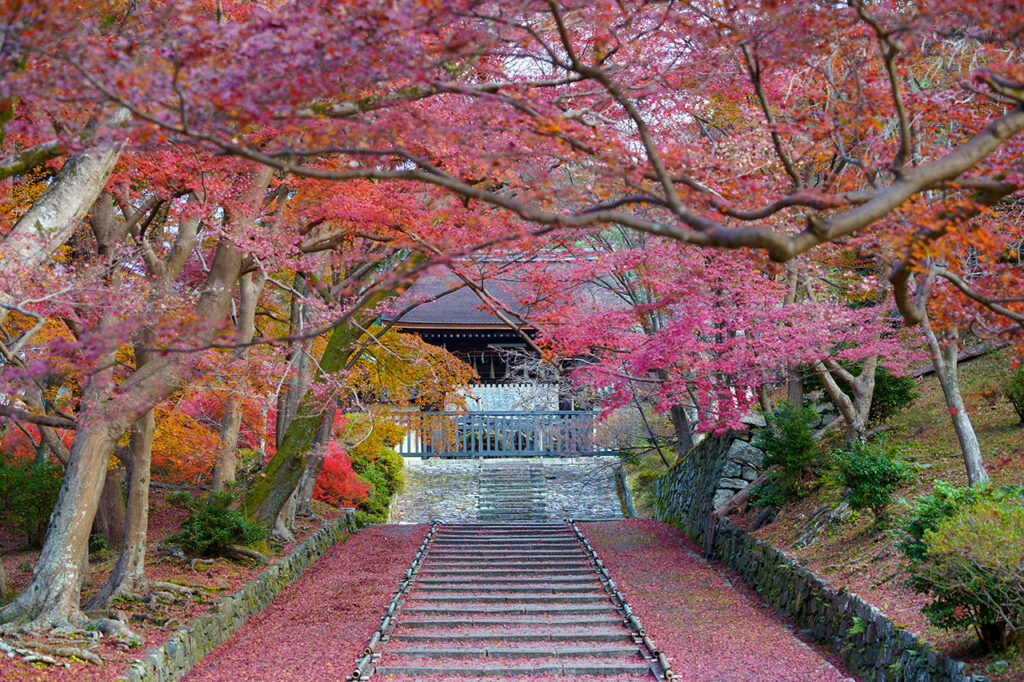
Bishamondo Temple (pic from Leaf Kyoto)
No exploration of Yamashina is complete without a visit to Bishamondo Temple, one of the district’s most significant historical sites. Founded more than a thousand years ago, Bishamondo is particularly renowned for its autumn colors. The approach to the temple, lined with maple trees, becomes one of eastern Kyoto’s most impressive foliage displays in November.
Beyond the temple grounds, several mountain paths extend into the surrounding hills. These trails offer a more tranquil experience than many of Kyoto’s famous sightseeing areas. Hikers pass through cedar forests, bamboo groves, and quiet ridgelines where encounters with other walkers are often surprisingly rare. The combination of cultural heritage and natural beauty makes this one of the most rewarding half-day hikes in the region.
Following the Historic Route Between Kyoto and Otsu
Yamashina’s location has long made it a strategic corridor between Kyoto and Lake Biwa. For centuries, travelers moving along the Tokaido and other major routes passed through the area before continuing eastward. Modern hikers can still follow portions of these historical pathways while crossing mountain passes that have connected Kyoto and Otsu for generations.

Yamashina to Otsu
This route is particularly appealing for visitors interested in history. Along the way, traces of old roads, stone markers, and temple sites provide insight into the region’s role as a transportation hub during the Heian, Kamakura, and Edo periods. The journey also offers changing landscapes, transitioning from urban neighborhoods to dense forests and eventually opening toward views of Lake Biwa, Japan’s largest freshwater lake.
Hidden Forest Trails Around Yamashina
Beyond the better-known routes, Yamashina contains numerous smaller trails that receive little attention from international visitors. Many of these paths connect local temples, shrines, and residential communities located at the foot of the mountains. They provide an opportunity to experience a more everyday side of Kyoto, where local residents walk, exercise, and maintain longstanding connections to the surrounding landscape.
These lesser-known trails are especially appealing during spring, when cherry blossoms bloom throughout the valley, and during early summer, when fresh greenery transforms the forests into vibrant shades of green. For photographers, these quieter routes often offer some of the most atmospheric scenes in the district.
The Best Time to Hike in Yamashina
Spring
From late March through April, cherry blossoms appear throughout Yamashina. Combined with mild temperatures and clear skies, this creates ideal hiking conditions.
Summer
Summer brings lush vegetation and deep green forests. Early morning hikes are recommended, as Kyoto’s humidity can become intense during the afternoon.
Autumn
Autumn is arguably Yamashina’s most spectacular season. The forests surrounding Bishamondo Temple and Mount Daimonji display vibrant colors from late October through November, attracting photographers and nature enthusiasts alike.
Winter
Winter offers a quieter experience. While temperatures are cooler, visibility is often at its best, allowing hikers to enjoy expansive views across Kyoto and toward the surrounding mountains.
Practical Information for Hikers
Most hiking routes in Yamashina begin within walking distance of JR Yamashina Station or nearby subway stations. Before setting out, hikers should bring:
- Comfortable hiking footwear
- Adequate water, particularly during summer
- A charged mobile phone and offline maps
- Appropriate clothing for changing weather conditions
While the trails are generally well-maintained, some sections can become slippery after rain, particularly during the rainy season and autumn leaf-fall period. As with all outdoor areas in Kyoto, visitors should respect local customs, stay on designated paths, and avoid leaving any litter behind.
Where to Stay in Yamashina
Unlike central Kyoto, where most accommodations cater to short-term tourists, Yamashina is particularly appealing for travelers planning longer stays. The district offers a quieter residential environment, direct access to hiking trails, and significantly more space than many city-center hotels. For digital nomads, remote workers, families, and slow travelers, monthly rentals provide an opportunity to experience everyday life in Kyoto while remaining just minutes from the city center.

Misasagi: A Monthly Rental at the Gateway to the Mountains
One of the most attractive extended-stay options in Yamashina is Misasagi, a renovated traditional townhouse operated by Shiki Properties. Located only a short walk from Misasagi Station, the property is designed specifically for monthly stays and accommodates up to five guests. The house combines contemporary comforts with traditional Japanese elements, including exposed wooden beams, tatami flooring, and flexible sleeping arrangements that mix Western beds with Japanese futons. What makes Misasagi particularly appealing for hikers is its location. Guests have easy access to:
- Mount Daimonji hiking trails
- Bishamondo Temple
- The Lake Biwa Canal
- Historic routes connecting Kyoto and Otsu
- JR Yamashina Station and Kyoto’s wider rail network
For travelers who want to spend their mornings on the trails and their evenings in a quiet local neighborhood, Misasagi offers an ideal balance between nature and convenience.
Kiri: A Comfortable Long-Stay Base in Eastern Kyoto

Another excellent option is Kiri, one of Shiki Properties’ monthly rental homes in Kyoto. Like Misasagi, Kiri is designed for visitors staying several weeks or months rather than a few nights. Kiri can fit up to three guests, features warm wood finishes throughout the property and has a dedicated workspace suited for remote workers. It is a three minute walk from Yamashina Station. These types of furnished accommodations appeal to travelers seeking more space, privacy, and immersion in local life than a conventional hotel can provide. Monthly rentals such as Kiri are particularly well suited to:
- Remote workers
- Researchers and academics
- Families relocating temporarily
- Long-term language students
- Travelers exploring Kyoto at a slower pace
Compared with staying in central Kyoto, guests benefit from quieter surroundings, larger living spaces, and easier access to outdoor destinations such as the mountains surrounding Yamashina.
Why Long-Stay Travelers Choose Yamashina
Many visitors overlook Yamashina in favor of more famous Kyoto districts, but that is precisely what gives the area its appeal. A monthly stay allows travelers to discover local cafés, neighborhood temples, canal-side walking paths, and mountain trails that most tourists never see. Rather than experiencing Kyoto solely through its major attractions, visitors can develop a deeper connection with the city and its surrounding landscapes.
For hikers, photographers, writers, and remote workers, Yamashina offers something increasingly difficult to find in Kyoto: space, tranquility, and immediate access to nature, without sacrificing convenience.


