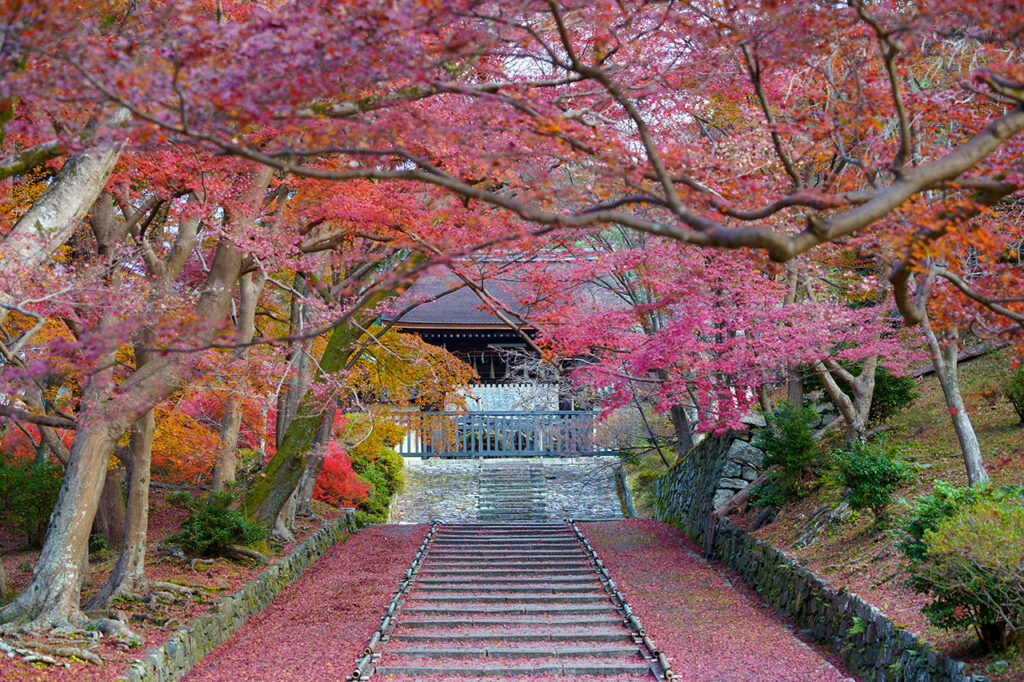
While most visitors to Kyoto head west toward Arashiyama or south to Fushimi Inari Taisha, relatively few venture east into Yamashina. Nestled between the Higashiyama Mountains and neighboring Shiga Prefecture, this often-overlooked district offers some of the most rewarding hiking opportunities in the Kyoto area.
Yamashina occupies a unique geographical position. Historically, it served as an important gateway between Kyoto and eastern Japan, with major transportation routes passing through the valley for centuries. Today, the district combines accessible mountain trails, historic temples, forested ridgelines, and sweeping views over Kyoto Basin, all without the crowds that characterize many of the city’s better-known attractions. For travelers interested in experiencing a quieter side of Kyoto, Yamashina provides an ideal starting point for both cultural exploration and outdoor adventure.
Why Yamashina Is One of Kyoto’s Best Areas for Hiking
Kyoto is surrounded by mountains, yet many visitors only encounter them as a scenic backdrop. In Yamashina, the mountains become part of the experience. The district sits at the foot of several peaks that form the eastern edge of Kyoto Basin. A network of well-established trails links temples, mountain passes, historical landmarks, and viewpoints, creating routes suitable for everyone from casual walkers to experienced hikers.
Unlike some hiking destinations that require extensive travel from the city center, Yamashina is remarkably accessible. JR Yamashina Station is only one stop from Kyoto Station, making it possible to leave the city and find yourself on a forest trail within minutes. What distinguishes Yamashina from other hiking areas around Kyoto is the combination of natural scenery and cultural heritage. Many trails follow routes that have been used for centuries by pilgrims, merchants, and travelers moving between Kyoto and the eastern provinces.
Hike to Mount Daimonji from Yamashina
Route from Yamashina Station
Among the most rewarding hikes in the area is the ascent to Mount Daimonji, famous for the giant character “大” that is illuminated during Kyoto’s annual Gozan Okuribi festival each August. While many hikers approach Daimonji from Ginkakuji, the Yamashina side offers a quieter and often less crowded alternative. The trail climbs steadily through mixed woodland before reaching the mountainside fire site, where one of the finest panoramic views in Kyoto awaits. It takes approximately three hours to reach the site from Yamashina Station.
From the viewpoint, hikers can look across the entire Kyoto Basin, with landmarks such as the Kyoto Tower visible on clear days. During autumn, the surrounding hills become a patchwork of red and gold foliage, while winter often brings exceptionally clear visibility. The route is moderate in difficulty and suitable for hikers with a reasonable level of fitness.
Bishamondo Temple and the Mountain Trails Beyond
Bishamondo Temple (pic from Leaf Kyoto)
No exploration of Yamashina is complete without a visit to Bishamondo Temple, one of the district’s most significant historical sites. Founded more than a thousand years ago, Bishamondo is particularly renowned for its autumn colors. The approach to the temple, lined with maple trees, becomes one of eastern Kyoto’s most impressive foliage displays in November.
Beyond the temple grounds, several mountain paths extend into the surrounding hills. These trails offer a more tranquil experience than many of Kyoto’s famous sightseeing areas. Hikers pass through cedar forests, bamboo groves, and quiet ridgelines where encounters with other walkers are often surprisingly rare. The combination of cultural heritage and natural beauty makes this one of the most rewarding half-day hikes in the region.
Following the Historic Route Between Kyoto and Otsu
Yamashina’s location has long made it a strategic corridor between Kyoto and Lake Biwa. For centuries, travelers moving along the Tokaido and other major routes passed through the area before continuing eastward. Modern hikers can still follow portions of these historical pathways while crossing mountain passes that have connected Kyoto and Otsu for generations.
Yamashina to Otsu
This route is particularly appealing for visitors interested in history. Along the way, traces of old roads, stone markers, and temple sites provide insight into the region’s role as a transportation hub during the Heian, Kamakura, and Edo periods. The journey also offers changing landscapes, transitioning from urban neighborhoods to dense forests and eventually opening toward views of Lake Biwa, Japan’s largest freshwater lake.
Hidden Forest Trails Around Yamashina
Beyond the better-known routes, Yamashina contains numerous smaller trails that receive little attention from international visitors. Many of these paths connect local temples, shrines, and residential communities located at the foot of the mountains. They provide an opportunity to experience a more everyday side of Kyoto, where local residents walk, exercise, and maintain longstanding connections to the surrounding landscape.
These lesser-known trails are especially appealing during spring, when cherry blossoms bloom throughout the valley, and during early summer, when fresh greenery transforms the forests into vibrant shades of green. For photographers, these quieter routes often offer some of the most atmospheric scenes in the district.
The Best Time to Hike in Yamashina
Spring
From late March through April, cherry blossoms appear throughout Yamashina. Combined with mild temperatures and clear skies, this creates ideal hiking conditions.
Summer
Summer brings lush vegetation and deep green forests. Early morning hikes are recommended, as Kyoto’s humidity can become intense during the afternoon.
Autumn
Autumn is arguably Yamashina’s most spectacular season. The forests surrounding Bishamondo Temple and Mount Daimonji display vibrant colors from late October through November, attracting photographers and nature enthusiasts alike.
Winter
Winter offers a quieter experience. While temperatures are cooler, visibility is often at its best, allowing hikers to enjoy expansive views across Kyoto and toward the surrounding mountains.
Practical Information for Hikers
Most hiking routes in Yamashina begin within walking distance of JR Yamashina Station or nearby subway stations. Before setting out, hikers should bring:
Comfortable hiking footwear
Adequate water, particularly during summer
A charged mobile phone and offline maps
Appropriate clothing for changing weather conditions
While the trails are generally well-maintained, some sections can become slippery after rain, particularly during the rainy season and autumn leaf-fall period. As with all outdoor areas in Kyoto, visitors should respect local customs, stay on designated paths, and avoid leaving any litter behind.
Where to Stay in Yamashina
Unlike central Kyoto, where most accommodations cater to short-term tourists, Yamashina is particularly appealing for travelers planning longer stays. The district offers a quieter residential environment, direct access to hiking trails, and significantly more space than many city-center hotels. For digital nomads, remote workers, families, and slow travelers, monthly rentals provide an opportunity to experience everyday life in Kyoto while remaining just minutes from the city center.
Misasagi: A Monthly Rental at the Gateway to the Mountains
One of the most attractive extended-stay options in Yamashina is Misasagi, a renovated traditional townhouse operated by Shiki Properties. Located only a short walk from Misasagi Station, the property is designed specifically for monthly stays and accommodates up to five guests. The house combines contemporary comforts with traditional Japanese elements, including exposed wooden beams, tatami flooring, and flexible sleeping arrangements that mix Western beds with Japanese futons. What makes Misasagi particularly appealing for hikers is its location. Guests have easy access to:
Mount Daimonji hiking trails
Bishamondo Temple
The Lake Biwa Canal
Historic routes connecting Kyoto and Otsu
JR Yamashina Station and Kyoto’s wider rail network
For travelers who want to spend their mornings on the trails and their evenings in a quiet local neighborhood, Misasagi offers an ideal balance between nature and convenience.
Kiri: A Comfortable Long-Stay Base in Eastern Kyoto
Another excellent option is Kiri, one of Shiki Properties’ monthly rental homes in Kyoto. Like Misasagi, Kiri is designed for visitors staying several weeks or months rather than a few nights. Kiri can fit up to three guests, features warm wood finishes throughout the property and has a dedicated workspace suited for remote workers. It is a three minute walk from Yamashina Station. These types of furnished accommodations appeal to travelers seeking more space, privacy, and immersion in local life than a conventional hotel can provide. Monthly rentals such as Kiri are particularly well suited to:
Remote workers
Researchers and academics
Families relocating temporarily
Long-term language students
Travelers exploring Kyoto at a slower pace
Compared with staying in central Kyoto, guests benefit from quieter surroundings, larger living spaces, and easier access to outdoor destinations such as the mountains surrounding Yamashina.
Why Long-Stay Travelers Choose Yamashina
Many visitors overlook Yamashina in favor of more famous Kyoto districts, but that is precisely what gives the area its appeal. A monthly stay allows travelers to discover local cafés, neighborhood temples, canal-side walking paths, and mountain trails that most tourists never see. Rather than experiencing Kyoto solely through its major attractions, visitors can develop a deeper connection with the city and its surrounding landscapes.
For hikers, photographers, writers, and remote workers, Yamashina offers something increasingly difficult to find in Kyoto: space, tranquility, and immediate access to nature, without sacrificing convenience.
Kyoto is famous for cherry blossoms and fiery autumn colors, but June reveals a side of the city that many travelers miss. As Japan’s rainy season, known as tsuyu, settles in, Kyoto transforms into a lush, misty landscape filled with vibrant greenery, tranquil temples and seasonal blooms. With fewer crowds and a uniquely atmospheric charm, this is one of the most rewarding times to explore Japan’s ancient capital. If you’re visiting Kyoto in June, here’s how to experience its quieter, rain-soaked beauty.
Embracing the Rainy Season Atmosphere
When the rainy season starts in kansai (osaka/kyoto)
From early June to mid-July, Kyoto experiences frequent rainfall, high humidity, and shifting temperatures. Average temperature ranges from 20 to 28°C (68-82°F), with a mix of light drizzle and heavier showers. Despite them, it rarely lasts all day, so rest assured that you can still explore comfortably as long as you’re prepared enough.
Rather than detracting from the experience, nature becomes lush and luxuriant, giving it a fairytale-like appeal. Moss gardens (or koke as they’re known in Japanese), like those of the renowned Saihouji Temple, glow brighter and the city’s greenery becomes intensely vibrant. Many travelers find that Kyoto feels more peaceful and less crowded compared to the following peak tourist season during July and August.
Hydrangea Season: Kyoto’s Rainy Season Highlight
Hydrangea season at Mimurotoji Temple Photo from kyototourism.org
June is synonymous with hydrangeas (called ajisai in Japanese). These flowers thrive in rainy conditions and bloom in stunning shades of blue, pink, and purple. Similar to our previous post about rainy season in Osaka, many places in Kyoto have them, including gardens.
Best Hydrangea Spots
Mimuroto-ji Temple: Known as the “Hydrangea Temple,” featuring thousands of blooms across landscaped gardens, as well as many azaleas
Sanzen-in : A serene mountain temple with moss gardens and hydrangea-lined paths
Umenomiya Taisha Shrine: Offers a wide variety of hydrangea species alongside ponds and seasonal flowers
Heian Jingu Shrine: Its historic garden becomes open to the public during the season and is a memorable event which happens every year
Hydrangeas are actually at their most beautiful after rainfall, when their colors deepen and petals glisten with droplets.
Seasonal Festivals You Can’t Miss
Yanagidani Kannon Hydrangea Photo from en.japantravel.com
Ajisai Matsuri (Hydrangea Festival, June 1st-June 30th)
Held at Fujinomori Shrine, this festival runs throughout June, with its gardens filled with hydrangeas, traditional performances and rituals, as well as occasional cultural demonstrations such as kemari, a classical court sport similar to playing soccer, but only by using your right foot to juggle the ball and passing it around once it hits the ground, with eight people in total. This event celebrates both nature and tradition in a uniquely Kyoto way, the sport having existed for at least a thousand years and is an integral part of its history.
On a side note, while Shiramine Jingu Temple is more well known for kemari, where the God of Sports resides, its main event takes place in January rather than June.
At Youkoku-ji Temple, also known as Yanagidani Kannon, this event transforms temple grounds into a colorful hydrangea wonderland with thousands of them blooming and seasonal decorations like flower-filled purification basins, as well as numerous flower-decorated umbrellas called Umbrella Sky.
Unlike the name implies, it actually runs for the whole month of June, just like the aforementioned Ajisai Matsuri, making it easy to fit into your itinerary.
Kifune Festival (June 1st)
Held at Kifune Shrine, this traditional festival marks seasonal change with rituals such as Susano’s sacred dance ceremony and local celebrations involving a portable shrine walked around the neighborhood.
Summer Purification Ceremony (June 30th)
Nagoshi no Harae (Summer Purification Ceremony) at Kamigamo Shrine is one of Kyoto’s most atmospheric June traditions. Held on June 30, this centuries-old Shinto ritual marks the midpoint of the year, allowing participants to symbolically cleanse themselves of impurities and pray for good health and protection during the months ahead. Visitors can walk through a large ring of reeds (chinowa), a purification practice believed to ward off misfortune, and submit paper dolls known as hitogata that symbolically absorb their worries and impurities. In the evening, priests release these paper effigies into the Nara-no-Ogawa stream during a torch-lit ceremony accompanied by traditional prayers and music, creating one of Kyoto’s most memorable early-summer spectacles.
Rainy-Day Compatible Activities
1. Explore Temples and Shrines
Rain adds a mystical quality to iconic sites like Fushimi Inari Taisha Shrine and Kiyomizu-dera Temple, which feel more serene and contemplative with fewer crowds than you would experience in spring and autumn. If you truly want to go where locals go we recommend visiting Shimogamo Shrine, Kamigamo Shrine and Daitokuji Temple.
2. Wander Covered Markets
Head to Nishiki Market, Teramachi and Shinkyogoku Shopping Arcades for a lively, mostly covered street experience. Since it is covered by a roof for a majority of the way for all locations, you won’t need to worry about the weather, and there are plenty of shops and restaurants to see. Our recommendations include Kasumi and the Sir Thomas Lipton Café.
For less busy arcades you can also visit the Kyoto Sanjo Shopping Street or Furukawacho Shopping Street.
These provide a comfortable break while still offering cultural insight and entertainment. Kyoto Aquarium is also close to a big park. You can walk around if the rain remains light or stops completely. As for the International Manga Museum, it has a small café where you can take a break and look around at all the signatures from famous mangaka from all genres on the walls.
4. Enjoy a Traditional Tea Experience
Rainy afternoons are ideal for slowing down. A tea ceremony or matcha break in one of the many traditional teahouses around Kyoto offers a cozy, authentic experience, arguably even more enjoyable with the sound of rain outside. We recommend the ones in Uji like Ito Kyuemon and Tsujiri for quality matcha and desserts, as well as Ippodo which also owns a tea house in the previously mentioned Teramachi.
If you’re interested in the history of tea ceremonies we also recommend checking out Omotesenke Kitayama Kaikan where you can learn about tea utensils as well as other aspects of Omotesenke (one of the three historic schools of tea ceremonies in Japan). Note the hall is closed between May 27th to June 19th 2026 for exhibition changes. The exhibition space only offers information in Japanese but you can enjoy tea and traditional sweets when you visit.
Why June Might Be One of the Best Times to Visit Kyoto
Despite the weather, June has some major advantages, such as fewer crowds compared to peak seasons, especially the one following in July and August, as well as lower accommodation prices. This season is known for its beautiful and vibrant nature of hydrangeas and lush greenery, offering atmospheric photographic opportunities. Many visitors report that Kyoto’s temples and gardens feel even more magical in the rain, with mist, reflections and vivid colors enhancing the experience.
Practical Tips for Visiting Kyoto in June
Please be sure to bring a compact umbrella or buy one at the convenience store (they’re widely available in Japan), and to wear breathable and waterproof clothing, since humidity can be very high and rainfall can often be unpredictable or occur for days at a time. As such, planning a mix of indoor and outdoor activities is a foolproof way of navigating the season in case of sudden or unexpected changes. Keep in mind to visit popular sites early in the morning to avoid crowds, whenever possible, especially in more popular spots.
Should you Visit Kyoto in June?
While it may seem June looks unappealing at first glance due to its weather, it also has a lot to offer once you take the rain factor into account. If you’re willing to embrace it and take your time visiting at a slower pace, you’ll discover a Kyoto that many travelers never see, and one you may never forget.
Most visitors walking through Kyoto’s Kikuhama area today would never guess the neighbourhood’s unusual past.
Located near the Kamogawa River just south of Gojo Street, the area is now known for its renovated machiya townhouses, stylish cafés, boutique accommodations, and relaxed local atmosphere. But behind the quiet streets lies a history connected to Kyoto’s former entertainment districts, the yakuza, and even the early origins of Nintendo.
Seika construction in progress
As Shiki Properties continues work on our upcoming machiya Seika, we’ve been reflecting on how dramatically this part of Kyoto has transformed over the past century, and why it’s quickly becoming one of the city’s most interesting areas to stay.
The Forgotten History of Kyoto’s Gojo Paradise
An example of prior teahouse now used as a guesthouse
Before its recent redevelopment, Kikuhama was home to Gojo Paradise (五条楽園), one of Kyoto’s best-known entertainment districts. The area originally developed during the Edo period and became famous for its traditional tea houses, geisha culture, and nightlife. At its peak in the 1960s, the district reportedly contained around 200 tea houses and 20 geisha houses, making it one of Kyoto’s busiest after-dark destinations.
Although Japan introduced the Anti-Prostitution Law in 1958, many businesses in the area continued operating for decades through legal loopholes and changing business structures. Over time, however, shifts in lifestyle, westernisation, and new forms of entertainment caused the district to slowly decline. By the early 2000s, only a handful of businesses remained.
The Surprising Connection Between Nintendo and Kyoto’s Underworld
Nintendo’s former HQ is now a hotel
One of the most fascinating parts of the neighbourhood’s history is its connection to Nintendo. Long before becoming one of the world’s biggest gaming companies, Nintendo began in Kyoto as a hanafuda and karuta playing card manufacturer. During the early 20th century, gambling establishments throughout Kyoto created strong demand for these cards, especially during periods when western-style playing cards faced restrictions. As a result, members of Kyoto’s underworld and gambling circles became some of Nintendo’s early customers.
Hanafuda cards
The company later experimented with several businesses during Japan’s postwar economic boom, including taxis, food ventures, and reportedly even plans related to the love hotel industry. However, Nintendo eventually shifted its focus toward toys and electronic entertainment, completely reinventing itself into the global family-friendly brand recognised today. By the late 1960s, the company had largely distanced itself from Kyoto’s nightlife districts and expanded toward Tokyo and international markets.
From Yakuza Headquarters to Creative Hub
Yakuza HQ is now a special place for artists
For many years, the neighbourhood remained closely associated with the Kyoto-based yakuza group Aizukotetsu-kai (会津小鉄会), whose headquarters stood nearby. Even as cafés, guesthouses, and hotels began opening in the area during the 2010s, many locals still viewed the district as dangerous because of its lingering reputation. That image finally began to change in 2017, when Kyoto City ordered the yakuza headquarters to cease operations. The building was demolished in 2021, symbolising a major turning point in the neighbourhood’s redevelopment.
In a twist that surprised many locals, the site was later purchased by Yamauchi No.10 (YN10), a foundation established by Nintendo’s founding family. Today, YN10 is leading several long-term redevelopment projects in the area, including SOHA and the Takase River Project, with the goal of transforming the neighbourhood into a creative district for artists, designers, entrepreneurs, and local businesses. The riverside areas are also being revitalised, creating new public spaces where locals and visitors can once again enjoy the atmosphere along the Takase River and Kamogawa River.
Why Kikuhama Is Becoming One of Kyoto’s Most Interesting Areas to Stay
Ikehan -a popular tea house next to the river
Walking through Kikuhama today feels very different from its past reputation. The streets are lined with independent cafés, renovated machiya, small restaurants, and creative spaces. Young Kyoto residents are increasingly moving into the area, while visitors are discovering a quieter alternative to more crowded tourist districts like Gion or Higashiyama.
At the same time, traces of the neighbourhood’s history remain visible through its architecture. Some former tea houses still feature traditional tiled exteriors, stained glass windows, and distinctive karahafu-style roofs, giving the area a unique atmosphere that blends old Kyoto with modern redevelopment. This balance between preservation and renewal is part of what makes the neighbourhood so compelling today.
Discovering Kyoto Beyond the Tourist Areas
As Shiki Properties prepares for the completion of our upcoming machiya Seika, we’re also thinking about how to preserve and reflect the character of the surrounding area through design. Our construction team is currently incorporating subtle elements inspired by the neighbourhood’s architectural history into the property’s interiors, helping guests experience a deeper connection to this evolving part of Kyoto.
Incorporating Hanafuda cards into Seika’s design
Located just moments from the Kamogawa River in the same area, Kumei is one of Shiki Properties’ machiya accommodations in the area. Designed for groups of up to six guests, the property combines traditional Kyoto architecture with modern comfort, making it ideal for families, small groups, or longer stays.
One of Kumei’s biggest attractions is its location. Guests can easily walk along the Kamogawa River in the mornings or evenings, explore nearby cafés and restaurants, or reach central Kyoto areas such as Gion, Kawaramachi, and Kiyomizu-dera within a short distance. Despite being so close to the city centre, the neighbourhood still retains a calm residential atmosphere that many visitors are increasingly seeking out.
Kikuhama’s story is ultimately one of reinvention: a neighbourhood once associated with gambling, nightlife, and organised crime that is gradually becoming one of Kyoto’s most creative and culturally fascinating districts.
The Gion Festival (祇園祭) runs the entire month of July, and where you sleep could be the difference between watching the parade from a rooftop and scrambling through the crowd at 6 AM. Here’s everything you need to know about finding the perfect base for Japan’s greatest festival, with accommodation options that put you right in the heart of the action.
Kyoto in summer is a vivid blend of tradition, culture, and seasonal beauty. From historic festivals and lantern-lit rituals to modern fireworks shows and peaceful temple experiences, summer festivals in Kyoto offer something for every traveler. If you’re planning a trip between June and August, this guide covers the best Kyoto has to offer during the season.
Gion Festival
Gion Matsuri: Kyoto’s Most Famous Summer Festival (July 1st-31st)
The highlight of Kyoto summer festivals is undoubtedly Gion Matsuri, held throughout July. With origins dating back over 1,000 years, this iconic event transforms the city into a vibrant historic celebration.
The main attraction is the Yamaboko Junko, a grand parade of massive wooden floats decorated with decorative textiles and carvings. In the evenings leading up to the parade, downtown Kyoto becomes a lively pedestrian zone lined with street food stalls and lanterns. It is also a nice opportunity to try on yukata for an authentic festival mood.
Where to stay in Kyoto during the Gion Matsuri?
Planning a trip to Gion Matsuri? One of Japan’s most famous summer festivals brings huge crowds to Kyoto every July, which means hotels, especially around the lively Shijo Street area, often sell out months in advance. If you’re still looking for accommodation, consider staying in a traditional private machiya townhouse. These historic Kyoto homes offer more space, privacy, and an authentic local experience compared to standard hotels.
We offer several machiya properties conveniently located within walking distance,or just one or two train stops, from the main festival areas. Popular options include Kai , Zen Fuyacho,Natsu, Gojo Furusato and more, giving you easy access to the parade routes, evening street food stalls, and cultural events during Gion Matsuri. We are also running a special summer campaign where you can get a 20% discount on stays between May and September when you use this code KYOTOGRAPHIE2620 when you pay on our direct booking site.
If you’re looking to stay in Kyoto for the whole duration of the festival we recommend checking out our monthly options.
Kyoto Geijutsu Hanabi: A Modern Fireworks Experience (June 3rd)
For a contemporary twist on tradition, Kyoto Geijutsu Hanabi is one of the most unique Kyoto summer events. This ticketed fireworks show elevates hanabi (or fireworks) into a form of performance art, a great way to kickstart the season. Held at Kyoto Racecourse, each display is choreographed to music with precise timing, creating a cinematic experience with beautiful storytelling. With its showcase of thousands of fireworks, it feels more like a live show than a casual event. As it is a very popular event held almost every year, be sure to preorder your tickets in advance: thankfully, there is official online support of foreign-issued cards, and once you have your tickets in hand, you do not have to show up extra early or fight for space.
Where to stay in Kyoto during the Geijutsu Hanabi ?
We have a monthly rental property, Yanagi, located one stop away from JRA Kyoto Racecourse. Yanagi is a stylish and elegantly simple Kyoto townhouse, designed to ensure the ultimate comfort and flexibility in a peaceful location easily accessible from the city center. This two-story house is located only 2 minutes from Chushojima Station on the Keihan Line. From there, you have easy access to Kyoto Station or the Higashiyama area.
For a quieter and more atmospheric experience, the Shōju-in Wind Chime Festival is one of the cooler activities in Kyoto you can enjoy.
Held from June to September in Ujitawara Town, this event features Instagram-worthy tunnels of over 2,000 glass wind chimes, called furin, displayed throughout the temple grounds. As the breeze flows through, the gentle ringing creates a natural cooling effect: something deeply appreciated during Kyoto’s famously humid summer. The temple also offers to make your own wind chime for a meager price. Other activities include shaping incense or trying your hand at copying sutras, to get a nice souvenir of the place to bring back home.
Let’s also not forget about the heart-shaped window (or inome) view the temple is known for. This photogenic piece of scenery makes for a great photo spot, so do not hesitate to check it out for yourself.
Kyoto Daisakusen: Kyoto’s Biggest Summer Music Festival (July 4th-5th)
What would be a Japanese summer without music festivals? This yearly festival hosts one of the most exciting Kyoto summer events and a must-see experience.
Organized by the Kyoto-based rock band 10-FEET, this large-scale outdoor music festival takes place every July in Uji at the Yamashiro General Sports Park, creating a high-energy yet relaxed outdoor experience. Attendance can reach tens of thousands, and since its launch in 2007, it has grown into one of the region’s most anticipated summer traditions, often considered the unofficial kickoff to summer in Kyoto.
What makes Kyoto Daisakusen unique is its artist-driven atmosphere. Unlike commercial festivals, it is curated by musicians themselves, which creates a strong sense of connection between performers and fans. Key highlights include multiple stages featuring top Japanese rock and indie artists, special collaborations and one-time-only performances, as well as a welcoming, community-driven vibe overall, driven in part by eco-conscious initiatives like recycling systems and reusable cups. We recommend booking early for this festival as well, as tickets tend to sell out fast.
Daimonji / Gozan no Okuribi: Ending Summer with Fire (August 16th)
On August 16th, Kyoto hosts Daimonji,also known as Gozan no Okuribi, one of the most symbolic summer events in Japan. This event marks the end of the season, and giant bonfires are lit on mountains surrounding the city one by one, forming kanji characters that can be seen from afar. They are said to guide ancestors back to the spirit realm safely after their yearly visit during Obon season and festivals, and families often create little vehicles for them to ride on using bamboo sticks and vegetables called shoryo-uma, or spirit horses, making it a cute and thoughtful way to pay respects, rooted in tradition.
The event happens around 8PM in the early evening around various parts of the city: the atmosphere is calm and reflective, while still being lively. It represents the true highlight of Kyoto summer, a scenery like this never seen anywhere else in Japan.
Traditional Summer Activities in Kyoto
Beyond festivals, there are many things to do in Kyoto in summer that showcase seasonal traditions, such as:
Riverside Dining (Kawayuka & Kawadoko)
Enjoy meals on platforms built over rivers like the Kamogawa river or in cooler mountain areas like Kibune. This is one of the most iconic ways to experience Kyoto in summer.
Evening Temple Illuminations
Many temples offer special night openings with beautiful lighting, creating a magical atmosphere without daytime crowds.
Local Neighborhood Festivals (Jizō-bon)
Smaller, community-based festivals in late August provide an authentic glimpse into local life.
Fireworks and Night Events
In addition to Kyoto Geijutsu Hanabi, nearby areas host traditional fireworks displays, perfect for a classic Japanese summer experience.
Tips for Visiting Kyoto in Summer
If you’re planning to explore Kyoto in June, July or August, keep these tips in mind:
Stay hydrated: We cannot stress this enough, especially considering Kyoto’s location surrounded by five sacred mountains, making wind and clouds difficult to pass by. Temperatures often exceed 30°C (86°F) with high humidity, which can make adjusting to the heat difficult
Plan for evenings, as many events are best enjoyed after sunset, avoiding peak heat during the day at the same time
Book early whenever possible, summer is the high season and hotels and event tickets sell out quickly
Use public transport, as many roads can be crowded or even closed-off during festivals
Why Visit Kyoto in Summer?
Kyoto’s summer is a season of contrasts: lively festivals and quiet temples, modern fireworks and ancient rituals. Whether you’re drawn by the energy of Gion Matsuri, the artistry of Kyoto Geijutsu Hanabi, or the tranquility of the Shōju-in Wind Chime Festival, there’s no shortage of unforgettable experiences.