June in Osaka is often overlooked by travelers, but that’s exactly what makes it special. As Japan’s tsuyu (rainy season) begins, the city transforms into a softer, more atmospheric version of itself: fewer crowds, shimmering streets after rain, and bursts of seasonal color. If you’re willing to embrace a little humidity and the occasional shower, Osaka in June offers a uniquely intimate and culturally rich travel experience.
What to Expect: Weather & Atmosphere
When the rainy season starts in kansai (osaka/kyoto)
June marks the start of the rainy season in Osaka, bringing warm temperatures of around 23–27°C (73-81°F) and frequent but often short-lived showers. While rainfall is common, it rarely lasts all day: expect a mix of drizzle, overcast skies, and occasional sunshine. The upside? Fewer tourists and shorter queues, lower hotel prices and a calm city vibe. Rather than a drawback, the rain becomes part of the experience, enhancing gardens, deepening colors, and adding a cinematic quality to urban scenes, especially with neon lights for a more cyberpunk aesthetic.
Seasonal Highlights: Nature Comes Alive
Hydrangea Season (Ajisai)
Following Japan’s deeply rooted love for seasonal changes and long tradition of flower-viewing, June represents peak hydrangea season. Osaka’s parks and gardens burst into shades of blue, purple, and pink, and since these flowers thrive in rain, it makes them even more vibrant on drizzly days, so much so that it has become the symbol for the month on a national level. We recommend strolling around places, such as Osaka Castle Park, and botanical gardens after rain for a peak photography experience and great shots. You can then spend some time away from the rain in a quiet café stop nearby for a relaxing break and cool desert.
Early Summer Flowers
In addition to hydrangeas, irises and lilies begin to bloom across the city in landscaped parks as well as waterfront areas. The most famous spots to see them are the Shirokita Park and Johoku Iris Garden.
Festivals & Events in June
Despite the rain, Osaka’s cultural calendar remains lively with traditional festivals and modern events, here are some of the highlights of the season below.
Major Festivals
Sumiyoshi Taisha Otaue Rice Planting Festival (June 14th)
A historic ritual featuring traditional costumes and ceremonial rice planting, held regardless of weather on the temple grounds.
Aizen Matsuri (June 30th – July 2nd)
One of Osaka’s first summer festivals, known for vibrant street stalls and lively processions.
Rainy-Day Activities
You may feel limited in terms of choices when raining, but there are actually limitless indoor activities you can enjoy. Indoor attractions are especially appealing in June, offering both shelter and fewer crowds, including:
Osaka Aquarium, featuring one of Japan’s best-known marine exhibits
Observation decks (which are mostly indoors) with panoramic city views, such as Tsutenkaku Tower and Umeda Sky Building
Museums, art galleries, and interactive exhibitions, like the National Museum of Art and the Osaka Museum of Living & Housing
Covered shopping arcades like Tenjinbashisuji, close to the aforementioned museum
Department store food halls (depachika)
Seasonal food discoveries like hamo pike eel, a local summer dish
A Slower, More Local Osaka
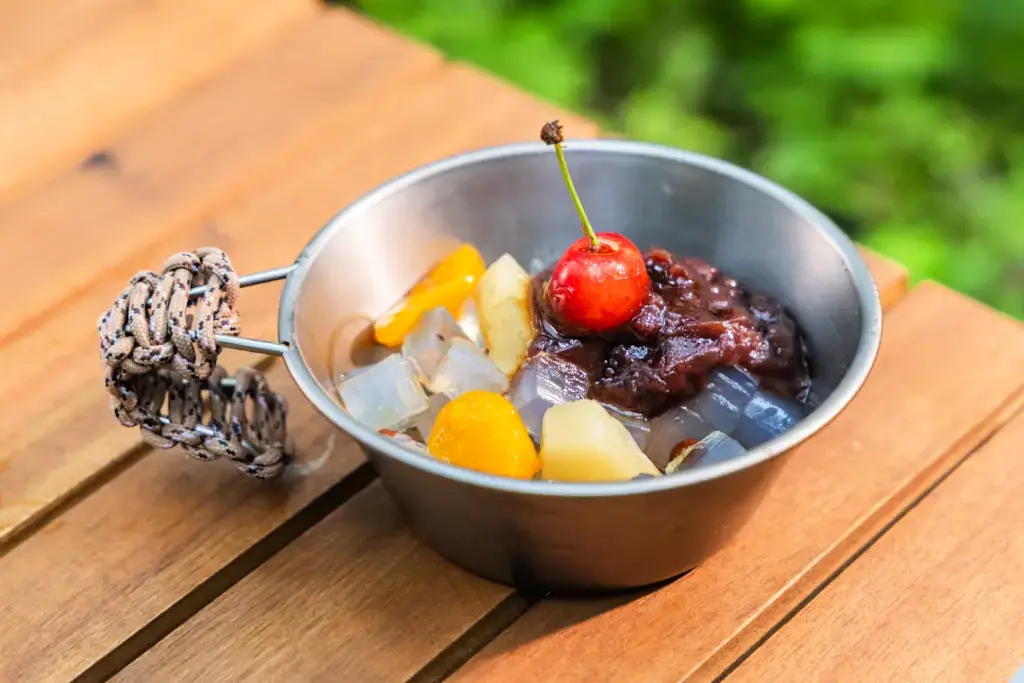
Without major holidays, June is quieter, giving you space to explore neighborhoods at your own pace. Rain-enhanced cityscapes with neon reflections in Dotonbori to misty temple grounds, Osaka in the rain has a cinematic charm that we all love, photographer or not. Early summer foods also begin to appear, and menus shift toward lighter, refreshing flavors suited to the humid weather, such as tsukemen cold noodles and anmitsu desserts.
Practical Tips for Visiting Osaka in June
There is some planning advice you can apply for your journey: for example, be sure to mix indoor and outdoor plans for a flexible itinerary in case of sudden showers or unexpected rescheduling. Popular attractions are a safe bet since there are fewer visitors during the month, and do not hesitate to go in the early morning or evening for cooler temperatures and less crowds.
We also recommend bringing a sturdy umbrella in case of strong winds, a lightweight rain jacket, as well as breathable quick-dry clothes and shoes (or you can also buy them for cheap at Uniqlo or GU), as humidity makes it very hard to dry.
Should you Visit Osaka in June?
Osaka in June isn’t about perfect weather, it’s about atmosphere, authenticity, and discovery. The rain softens the city, revealing a quieter and less crowded side that many travelers miss.
If you embrace the season, you’ll find plenty of festivals that feel more local than touristy, gardens in full bloom, and of course an urban jungle that rewards slow, curious exploration with a lot of hidden gems in its back alleys. Do not let the weather hinder you in your tracks, there is plenty of potential to enjoy Osaka even in the rain, as long as you are appropriately prepared.
Lantern-lit rivers, fireworks exploding above Osaka Castle, and the smell of sizzling takoyaki filling crowded night streets, summer in Osaka is one of the most exciting seasons in Japan. Between June and August, the city comes alive with traditional matsuri festivals, massive fireworks displays, anime conventions, and outdoor music events that attract both locals and visitors from around the world.
If you’re planning a trip to Osaka in summer 2026, or already living in Kansai, this is one of the best times to experience the city’s energy and culture. Historic shrines host centuries-old festivals, rivers glow with illuminated boats, and neighborhoods transform into lively gathering spots packed with food stalls, lanterns, and late-night celebrations.
Osaka Summer Weather: What to Expect
When the rainy season starts in kansai (osaka/kyoto) 2026
Summer in Osaka runs from June to August and is known for its heat and humidity, with average temperature ranging from 20°C to 35°C (86–95°F) during the day, and its rainy season (called tsuyu) happening from early June to mid-July which can bring lots of downpour. Peak heat is expected to hit Osaka and Kansai region as a whole from late July through August, with humidity levels often above 70% and peaking at 100%.
Expect hot days, warm nights, and occasional heavy rain early in the season. Despite the climate, summer remains one of the best times to visit thanks to Osaka’s event calendar.
Top Summer Festivals in Osaka
Below are some examples of must-see festivals during the summer.
One of the most famous festivals bringing people from all over Japan and even overseas. It features traditional processions, a river parade of pagodas with illuminated boats, and a large-scale fireworks event to top it off. It is known for its load of torches and lanterns decorating the city and family and friends dressing up in yukata for the occasion. There is an abundant number of food stalls in Namba, with the most popular ones being the traditional takoyaki as well as kakigori (shaved ice) to fight the overall heat. Do not hesitate to also try your hand at goldfish scooping or the shooting range for the whole festival experience.
Aizen Matsuri (June 30th-July 2nd)
Another historic festival marking the start of summer, with the Hoekago parade of women in yukata riding or carrying decorated palanquins, the Aizen Musume Contest, lantern-lit temple atmosphere and street food stalls. It is known as one of the oldest festivals and a rather compact one, giving it a rather intimate setting while remaining lively and fun.
Ikutama Festival (July 11th-12th)
This festival happens at Ikutama Shrine and is one of the three biggest summer festivals of Osaka, with Tenjin and Aizen festivals featured above. Expect to see the Rikutogyo shrine procession, led by taiko drums and lion dances alongside portable pagodas, and to eat to your heart’s content at the street vendors.
Sumiyoshi Festival (July 30th-August 1st)
This festival closes out the season and is deeply rooted in local traditions. Highlights include the sacred summer purification ritual Nagoshi Harai Shinji, with its traditional parade of Muromachi period attire and shrine ceremonies.
Comic Market in Osaka
comic market osaka
While Japan’s famous Comic Market (referred commonly to as Comiket) takes place in Tokyo, it strongly influences summer events across the country. Comiket itself is the world’s largest fan convention, centered on self-published works (or doujinshi), cosplay, and anime culture, attracting hundreds of thousands of visitors each year.
In Osaka, similar events share the same energy, such as Good Comic City Osaka in August, typically held at INTEX Osaka. This event is sometimes nicknamed “Comiket Osaka” because they offer a comparable experience in Kansai. In 2026, the event is scheduled for August 23. Such events typically feature hundreds of booths selling fan-made comics, art, and merchandise, as well as a cosplay gatherings and photo area.
In particular Good Comic city is Western Japan’s largest doujinshi convention. Over 12,000 creator circles and 4,000 cosplayers gather at INTEX Osaka, with a focus on female-oriented and BL/otome content that represents a massive segment of Japanese fandom. Information can be found on the official site here.
Why It’s Worth Visiting
For foreign visitors and residents, these conventions offer a deep dive into Japanese pop culture, with its unending rows of unique handmade goods you likely won’t find in stores, giving you a chance to interact directly with creators. Even if you’re not deeply into anime or manga, the atmosphere feels like a creative festival, blending art, fandom, and community, and is also one of the least well known types of festivals in Japan.
Summer Sonic Music Festival Osaka
This event is one of, if not the most famous music festival in Japan. While commonly held in Tokyo, the Osaka alternative is just as lively and represents a major highlight in Kansai summer. You can find tickets online and it is easily accessible, being held at Expo 70’ Commemorative Park. In 2026, Summer Sonic will take place between August 14 and August 16th.
Alongside these different festivals, other activities you can also enjoy in Summer include “Nishi-Umeda Candle Night”, with its number of candles covering the ground in numerous places, walks along Nakanoshima, the famous Umeda Sky Building and Tsutenkaku Tower, Dotonbori at night, botanical gardens and parks, such as Osaka Castle Park, shopping malls, aquariums and cafés with cold desserts.
Tips for Managing Osaka Summer Heat
Stay hydrated and bring your own water bottle, as there are only few trash cans around and convenience stores will likely be crowded (Supermarkets are also an option)
Wear lightweight clothing, preferably covering your skin, and use sun screen and sun protection
Plan outdoor activities early morning or evening if you’d like to avoid crowds as much as possible, as they are very popular
Take breaks in air-conditioned spaces to cool off
-bring cash for food stalls and smaller vendors
Use public transport to reduce walking whenever possible, since roads may be closed
Expect crowds, especially at fireworks events, as they are inevitable
Where to Stay in Osaka: Traditional Townhouse Rentals
For visitors who want more than a standard hotel room, staying in a traditional Japanese townhouse (machiya) is one of the most memorable ways to experience Osaka. Shiki Properties specializes in short-term rentals of beautifully renovated traditional homes across Osaka, and currently has a 10–20% summer discount on select stays from May to September 2026 , perfect timing for festival season.
Here’s a look at our Osaka lineup:
⭐ Premium Properties
Kanzaki 01Traditional Townhouse · Up to 4 guests · 73㎡
A designer home near the Mitsuya Shopping Arcade in Yodogawa Ward, Kanzaki 01 blends contemporary style with traditional Japanese touches , high ceilings, timber flooring, shoji screens, and a private balcony. The fully equipped kitchen, deep bathtub, and two spacious bedrooms (one tatami-floored, one western) make it ideal for groups or couples on an extended stay. Kanzakigawa Station is a 3-minute walk, putting Umeda just 5 minutes away by train, and Osaka Castle, Dotonbori, and USJ are all reachable with one transfer. Can be booked together with Kanzaki 02 for groups of up to 8.
Kanzaki 02Traditional Townhouse · Up to 4 guests · 62㎡
The neighboring sister property to Kanzaki 01, sharing the same excellent location near the Mitsuya Shopping Arcade and easy access to central Osaka. A great option for groups wanting two adjacent houses.
A charming premium townhouse accommodating up to 6 guests, a strong choice for families or larger friend groups wanting to stay together in a traditional setting.
A compact and cozy machiya for couples or small groups, with the authentic character of a traditional Osaka townhouse at a more accessible price point.
Set in a quiet neighborhood near Shigino Station, Kaori is a spacious and well-appointed machiya that blends modern comforts with traditional Japanese design. The layout includes a western-style bedroom with a queen bed, a tatami room with two futons, and a double sofa bed in the living area, flexible enough for families or mixed groups of up to five. A fully equipped kitchen, 4K smart TV, dedicated office desk, and washer/dryer make it a great option for both short visits and longer stays. Osaka Castle Park is a 20-minute walk away, and Namba, USJ, and Shin-Osaka are all reachable within 25–40 minutes by train.
All Shiki Properties come fully equipped with air conditioning (essential for Osaka summers), Wi-Fi, kitchen facilities, washing machines, and toiletries. Multilingual staff are available for support at any time.
Summer in Osaka combines traditional festivals and fireworks, modern pop culture and music events, lively nightlife and seasonal food. It’s one of the few places where you can experience both centuries-old traditions and cutting-edge fan culture in the same season, making it an exciting destination for both tourists and residents alike. So, is Osaka worth visiting in Summer? The short answer is yes, if you’re prepared accordingly for the heat. Summer is one of the best seasons to have a fun time in Japan, so do not hesitate to check it out for yourself !
Each year, Kyoto and Osaka embark on their most eagerly awaited change. Soft pink cherry blossoms spread across temple grounds, riverbanks and small streets, announcing the onset of one of the most beloved seasons in Japan. The sakura period is short and ephemeral, but its significance remains long after the petals have fallen.
In Kyoto and Osaka, cherry blossom viewing is more than just sightseeing. It is an experience of taking time to walk without a destination in mind, to let the spirit of spring shape the rhythm of your days.
The Arrival of Sakura Season
Cherry blossoms typically bloom from late March to early April, though exact timing varies each year depending on temperatures and rainfall. Buds appear quietly, swelling day by day until suddenly, almost overnight, entire streets and gardens are washed in pale pink.
In Kyoto, the blossoms soften the sharp edges of wooden machiya houses, ancient temple roofs, and stone pathways. In Osaka, they contrast beautifully with rivers, modern cityscapes, and historic fortifications. The result is a season that feels both delicate and powerful, a reminder of the beauty found in impermanence, a concept dear to Japanese culture and history.
Spring in Kyoto: A City in Bloom
Kyoto’s cherry blossom season carries a sense of calm elegance. As petals drift along narrow canals and temple courtyards, the city seems to move at a slower pace, inviting visitors to do the same. Being one of the most popular places for cherry blossom viewing, a few hot spots in particular highlight this festive scenery.
Philosopher’s Path
A narrow stone walkway following a gentle canal situated in Eastern Kyoto, the Philosopher’s Path becomes one of Kyoto’s most poetic scenes during spring. Cherry trees arch overhead, forming a tunnel of blossoms that reflect softly on the water. Early mornings are especially peaceful, when petals float silently downstream and the city has yet to awaken. Shops and cafes line up alongside the riverbank as well, making it easy to walk around and take in the sights.
Maruyama Park
Next to Yasaka Shrine, Maruyama Park is one of the most popular parks to hang out. As evening falls, it even takes on a festive glow. Locals gather beneath the illuminated cherry trees, sharing food, conversation and quiet laughter. At the heart of the park stands Kyoto’s famous weeping cherry tree, its long branches cascading gracefully downwards.
Kiyomizu-dera Temple
High above the city, Kiyomizu-dera offers sweeping views across seas of blossoms. From its wooden stage, visitors can watch as spring unfolds across Kyoto’s rooftops, temples and hillsides. When illuminated at night, the scene also becomes deeply atmospheric, blending history, light, and nature into a single unforgettable moment.
Arashiyama
In western Kyoto, Arashiyama combines rivers, mountains, bamboo groves, and cherry blossoms. Along the Katsura River, cherry blossoms frame the iconic Togetsukyo Bridge.
Spring in Osaka: Blossoms and Urban Energy
While Kyoto is infamous for its traditional cherry blossom scene, Osaka’s just as lively, open and welcoming. Large parks and riverside promenades provide space for relaxed hanami picnics, long walks and spontaneous gatherings beneath the trees.
Osaka Castle Park
Thousands of cherry trees surround Osaka Castle, transforming the historic grounds into one of the most celebrated sakura destinations. The contrast between delicate blossoms and the imposing castle walls captures an atmosphere of timeless balance. At night, soft lighting turns the scene into a glowing spring panorama. Its easy access in the heart of the city makes it a safe destination to check out and a nice breather in between visits.
Kema Sakuranomiya Park
Stretching for kilometers along the Okawa River, this riverside park offers a relaxed cherry blossom experience across Osaka’s center. Joggers, cyclists, families and couples move along beneath corridors of blooming trees while sightseeing boats drift quietly past, reflecting blossoms on the water’s surface.
Expo ’70 Commemorative Park
Spacious and calm, this park allows visitors to enjoy cherry blossoms without the intensity of central city crowds. Wide lawns, open skies and rows of blooming trees close to the Tower of the Sun create a peaceful setting ideal for slow afternoons and leisurely picnics, as well as a perfect spot for photography lovers.
When to Visit and How to Experience Sakura Season
Hanami is more than just flower viewing. It is a seasonal tradition that is based on reflection, appreciation and community. Friends gather under the trees, families lay out blankets to picnic and travelers stop to soak up the scene, leisurely adjusting to the soft beat of spring. The blossoms fall quickly, sometimes only lasting a week at their peak. A rainstorm or a breeze can change the trees from full to bare overnight. This ephemeral quality is what lends the cherry blossom season its depth of feeling, urging the viewer to stay in the moment and take the time to admire them.
Peak period generally falls between late March and early April, though bloom timing can shift each year. Early mornings offer serenity, while evenings reveal beautifully illuminated night views. Overall, wandering without a strict schedule often leads to the most memorable discoveries: rather than rushing from site to site, it is best to allow time for quiet walks, riverside pauses and spontaneous detours. Some of the most beautiful moments occur far from famous landmarks, beneath a lone cherry tree beside a narrow alley or small neighborhood shrine.
Should you Visit in March ?
Spring in Kyoto and Osaka is more than just pretty cherry trees. It is a season of atmosphere. The soft light, the delicate petals, gentle breeze, warming temperature and implicit sense of renewal all combine to make it a season like no other. For tourists, the cherry blossom season is a once-in-a-lifetime chance to experience Japan in a poetic way, a time when the past and present blend together seamlessly under the drifting petals, allowing them to appreciate the quiet joy of being present.
On December 18, 2025, the Japan Meteorological Corporation (JMC), published its first official outlook for the cherry blossom season. The report estimates the dates when cherry blossoms will begin flowering (kaika) and reach their peak bloom (mankai). These projections focus on Yoshino cherry trees at approximately 1,000 popular hanami (flower viewing) locations across the country, spanning from Hokkaido in the north to Kagoshima in the south. The latest update was published on March 19th, compared to the earlier January forecast the flowering dates for some prefectures have shifted +1 day, while some have shifted back a few days. JMC will continue to release updated forecasts as the season approaches, with the next update scheduled for March 26th .